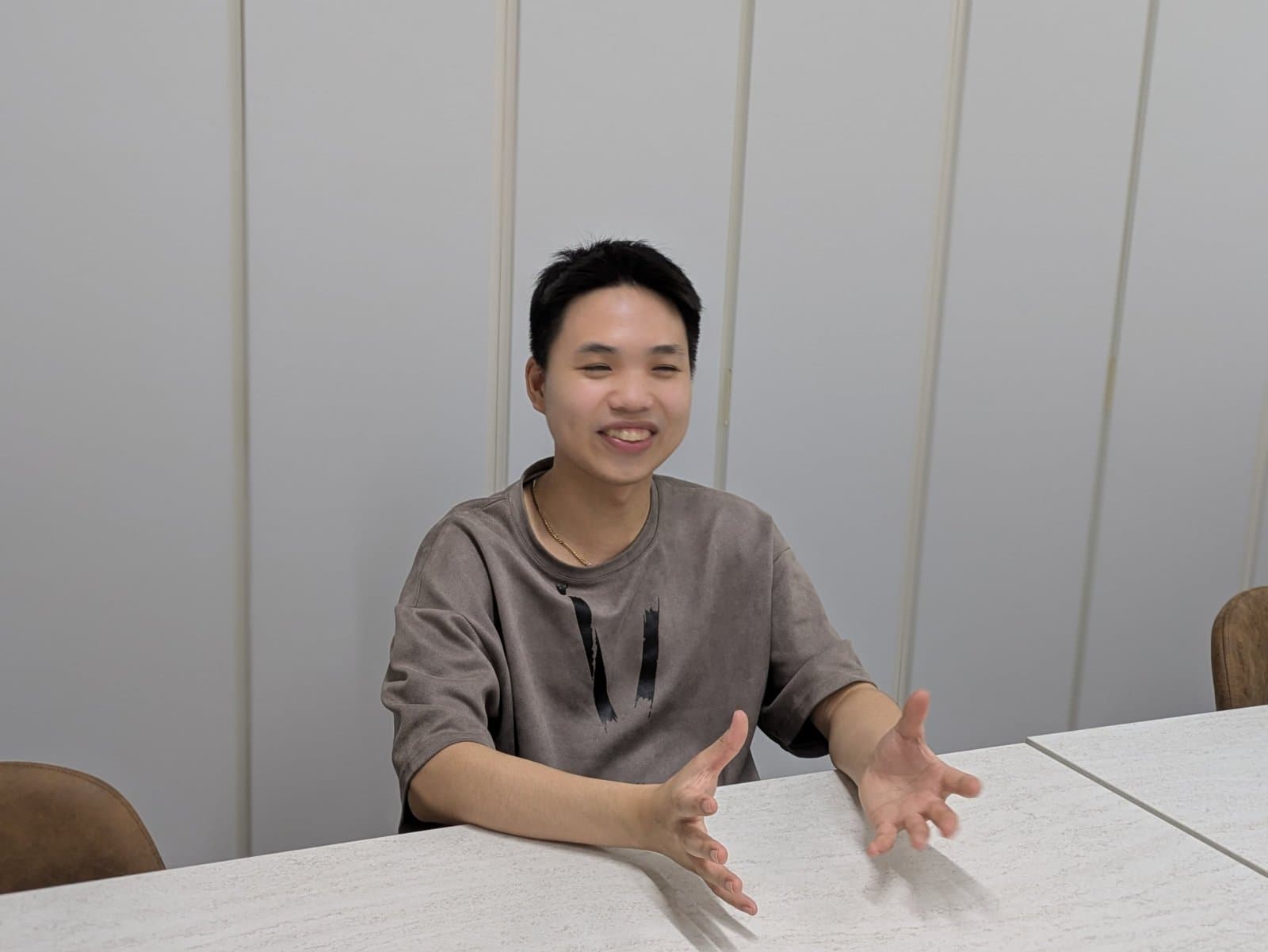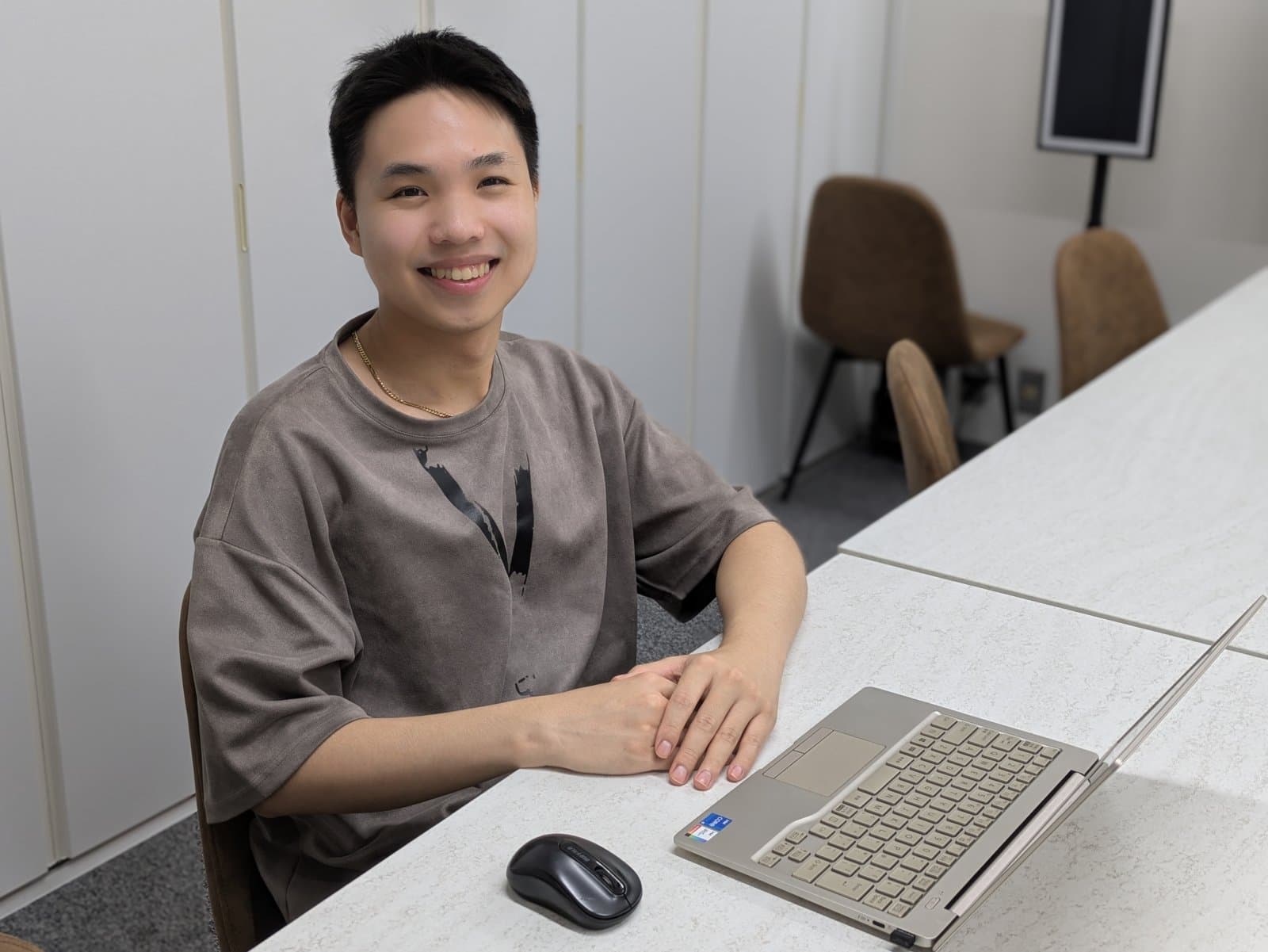
Duy's profile
— What kind of work are you in charge of now?
Duy I'm in the rental division, where I handle customer support and e-commerce. I look after customers from overseas as well as Japanese customers.
— Is there anything difficult about it?
Duy Japan and other countries think about service differently, so it can take time to explain things before customers understand the Japanese rules. But if I stay calm and explain slowly, they do understand in the end. Nothing makes me happier than having the rental returned without any trouble.
Expectations before coming to Japan, and first impressions of Shibuya
Amazed that the trains come on time
— What image did you have of Japan before you came?
Duy I pictured a clean country where people take rules and manners seriously. That impression didn't change once I actually got here. What impressed me most was that the trains come right on time.
— Is the attitude toward time different from Vietnam?
Duy It really is. In Vietnam, if I was just meeting friends to hang out, I was the type to think it was fine to be a little late (laughs). In Japan, everyone shows up before the agreed time, so I felt I had to follow their example.
— Did you take trains in Vietnam?
Duy I had never been on one. In Ho Chi Minh City, most people get around by motorbike. The roads get really crowded in the morning and evening, so a motorbike is handy because it can get through narrow streets, too. Work on the metro was moving ahead, but I never had a chance to ride it.
— What was it like the first time you rode a train in Japan?
Duy To tell the truth, I got a little motion sick (laughs). But I'm completely used to it now, and I think trains are really convenient.
Scramble Crossing: "Far more striking than in the videos"
— How did you feel the first time you came to Shibuya?
Duy I thought it was a really lively place, with so many people. There are lots of tall buildings and shops, too. What stuck with me most was the Scramble Crossing.
— Did you know about Shibuya before coming to Japan?
Duy Yes, I had watched lots of videos online. But when I actually went, I was surprised by how many people there were. The impression was even stronger, in a good way.
Shibuya recommendations, and the top experience to try in Japan
Yurinchi fried chicken to try at an izakaya on Miyamasuzaka
— Do you have a favorite place or shop in Shibuya?
Duy Tengu, an izakaya (Japanese-style pub) on Miyamasuzaka. I worked there part-time for four years before joining my current company, and I recommend it to everyone.
— Did you work in the kitchen?
Duy I worked out front, on the floor. A friend introduced me, and I went in for an interview. I actually wanted a kitchen job, but the manager told me, "The floor would be better."
— An izakaya in Shibuya must have been busy, right?
Duy There were hard times, too. But making friends on the job and getting to talk with customers was fun, so I was able to keep going for four years.
— What dish do you recommend?
Duy There are plenty of drinks, too, but what I especially recommend is the yurinchi (fried chicken topped with a tangy sauce). Personally, I think it's the tastiest thing they serve.
The top experience to recommend in Japan: hot springs
— If your family or friends from Vietnam came to Japan, what experience would you most want to recommend?
Duy Hot springs. Japanese culture has so many sides that are completely different from Vietnam, and that makes it fascinating. Out of all of them, a hot spring is the one I really want people to try.
— Why hot springs?
Duy My family and friends are busy with work and daily life, and they're always saying how tired they are. I'd like them to take it easy at a Japanese hot spring and shake off that everyday fatigue.
— So you like hot springs yourself, Duy.
Duy Yes. I studied tourism at a vocational school in Japan, and I learned about the famous hot spring areas, too. The first time I got into one was during a work placement at a ryokan (traditional Japanese inn) in Karuizawa that had ties with my school. It was so much fun that I shot lots of videos (laughs). Since then, I've been going to a hot spring once every month or two.
A blunder, and the Japanese seasons and culture that left an impression
The "oil" turned out to be vinegar
— Did you run into any trouble when you started living in Japan?
Duy It's less a problem than something I can laugh about now, but it happened right after I arrived. I couldn't read Japanese well, especially kanji, and when I went to buy oil at the supermarket, I bought vinegar by mistake (laughs).
— So you meant to buy oil, and it was vinegar.
Duy Exactly. I was a little let down, and I thought I really had to study Japanese harder. Of course, I went back and bought the oil. I can read more now than I could then, but I'm still learning.
A yearly highlight: hanami (flower viewing) under the cherry trees
— Among the seasons and culture that Japan has and Vietnam doesn't, what made an impression on you?
Duy I'm from the south of Vietnam, so the only seasons were the rainy season and the dry season. In Japan, you get to feel each of the four seasons one by one, and I find that really appealing.
— Which season do you like best?
Duy Spring, because I love cherry blossoms. Every year, my friends and I have a little party under the cherry trees. I like chatting about all sorts of things and taking lots of photos.
Still learning omotenashi, Japanese-style hospitality
— Is there a part of Japanese culture you like?
Duy I've worked in service jobs the whole time, so I'm especially interested in omotenashi, the Japanese way of hospitality. I'm studying it myself, but compared with my Japanese friends and coworkers, I still have a long way to go.
— Is there anything you'd like to do in the future?
Duy I'd like to keep introducing the good things about Japan to people in Vietnam, too.
Living costs and services in Shibuya: "I wish I'd looked into it before coming"
— Is there anything you wish you had known before coming to Japan?
Duy I wish I had looked into living costs properly. Daily meals and transportation cost more than I expected. I'd recommend gathering information before you come and managing your money with a plan.
— What turned out to be especially more expensive than you expected?
Duy Food. Cooking for myself is hard work, and when I eat out, it costs a lot. The yen was strong around the time I came to Japan, but it has gradually gotten weaker.
— Could you give us a concrete idea of the costs?
Duy I'd say eating out costs at least 800–900 yen each time. I get around almost entirely by train, and if you have a commuter pass, there's no extra charge within the section it covers, no matter how many times you ride. Without a pass, a single trip costs a few hundred yen, and fares went up this year, too.
Here is a summary of the costs Duy described.
Eating out: At least 800–900 yen per meal
Train (with a commuter pass): No extra charge within the section the pass covers, no matter how many times you ride
Train (without a commuter pass): A few hundred yen per trip. Fares went up in 2026, so it costs more than expected
— Overall, do you feel that prices in Japan are high?
Duy Sometimes they feel high, but compared with other countries, Japan may still be on the cheaper side.
Seitai bodywork, massage, and beauty services: "I'd like to give them a try"
— Have you used services such as seitai (Japanese bodywork), massage, or beauty treatments around Shibuya?
Duy I often walk past places like that, but I haven't actually gone into one yet. My friends have told me about lots of places they recommend, so I'd like to go if I get the chance.
— What about in Vietnam?
Duy Hair salons in Vietnam often offer a haircut and a massage as a set, so you don't have to go to separate places.
For anyone unsure about coming to Japan
— Finally, do you have a few words for people who are unsure about coming to Japan?
Duy Life in Japan can be hard at times, but you get to have lots of new experiences, and there's a lot you can learn, too. That's what makes it so interesting, so please do come.
— Is there anything that makes you say, "Come to Japan, because it has this"?
Duy There are many things, but above all, daily life is very convenient. If there's an everyday item you need, you can go and buy it right away at a nearby store. I don't think you'll have any trouble in day-to-day life.
— Thank you for your time today.
Duy Thank you, too.